
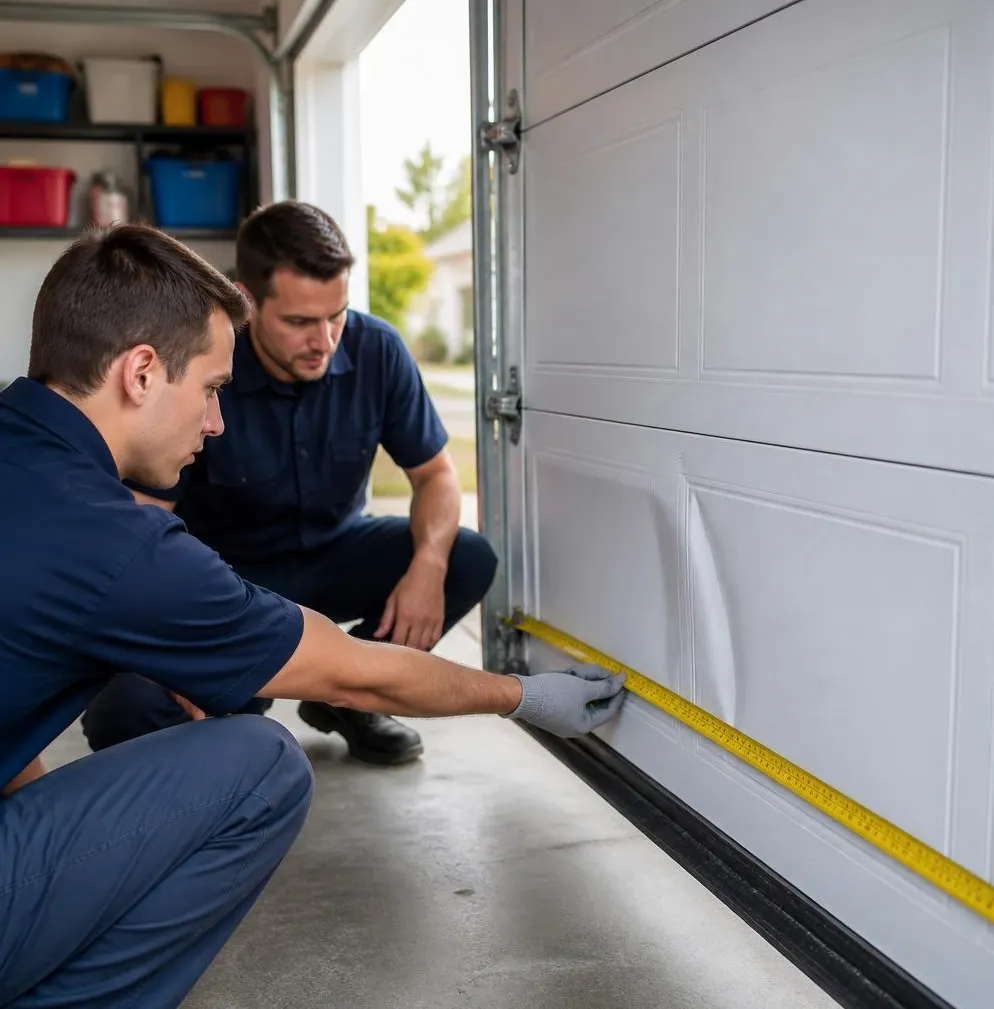
What we see on these calls
This argument comes up almost every week. One spouse wants the insulated door because the garage "feels like an oven" in the afternoon. The other doesn't want to pay extra for something they think is just marketing. Usually we get called out for something unrelated — a noisy opener, a spring that let go — and the insulation question comes up while we're standing in the driveway. So let's settle it with facts instead of guessing.
What R-value actually measures
R-value measures resistance to heat flow through the door panel. Higher R-value means less heat moves through the material per hour. On a garage door, that number depends on three things: how many steel skins the door has (single-layer, double-layer, or triple-layer), whether the core is polystyrene (a solid foam board) or injected polyurethane (which bonds to the steel and fills every gap), and how thick that core is. A basic single-layer steel door has no meaningful R-value — it's just a sheet of metal. A well-built insulated door with polyurethane core can land anywhere in the R-9 to R-18 range, depending on the manufacturer.
Who genuinely benefits
- Attached garages, especially with rooms above or beside them. If there's a bedroom, bonus room, or laundry area sharing a wall with the garage, an uninsulated door lets a lot of heat radiate into that space during Florida's long hot season. An insulated door cuts that transfer noticeably.
- Garages used as workspace, gym, or home office. If anyone spends real time out there, insulation is the difference between a tolerable space and one you can only use before 9 a.m.
- Homes where the garage holds the AC air handler or ductwork. Uninsulated doors let outside heat and humidity push against that equipment constantly, making it work harder.
- Anyone bothered by road noise or door rattle. The foam core and tighter panel construction dampen vibration and sound, which also helps during wind-driven rain when a thin door can drum like a tin roof.
- Storm-prone areas needing wind-load rated doors. Many wind-load rated doors are built with double-layer steel and a foam core for rigidity — the insulation often comes along for the ride because it's part of how the door meets the strength requirement, not a separate add-on.
Who's paying for nothing
- Detached garages used only for parking and storage. If nobody spends time in there and it's not attached to living space, the insulation has little to protect. You'll pay more for a benefit you never feel.
- Garages with good natural airflow already. If the garage has vents, a man door that stays open, or sits in shade most of the day, the temperature swing an insulated door prevents is smaller to begin with.
- Homeowners expecting it to fix humidity. Insulation slows heat transfer — it doesn't stop moisture, condensation, or the swelling that humid air causes in wood trim and some door materials. That's a sealing and ventilation issue, not an R-value issue.
The trade-offs nobody mentions in the showroom
Insulated doors weigh more than single-layer steel doors. That extra weight changes spring tension requirements and can put more load on an older opener that wasn't sized for it. If you're retrofitting an insulated door onto an existing track and opener setup, budget for a spring adjustment or opener upgrade conversation — skipping that step is how people end up with a door that won't open smoothly or a motor that burns out early. Polyurethane-core doors also tend to run noticeably higher in price than polystyrene, but they perform better long-term and the foam bonds to the steel, which adds stiffness that helps during wind events, not just in temperature control.
A quick way to settle the argument
Ask: does anyone use this garage as anything other than parking and storage, and is it attached to living space? If yes to either, insulation earns its cost over time through comfort and lower strain on nearby AC equipment. If the garage is detached, well-ventilated, and used strictly for the car and bins, spend that money on something with a clearer payoff — like a wind-load rated door or updated springs and cables that actually need attention.
When to call Precision Garage Door of Hudson
If you're genuinely torn between an insulated and non-insulated replacement, that's a conversation worth having in person rather than guessing from a brochure. We'll look at how the garage is used, whether it's attached to living space, what the current opener and springs can handle, and whether wind-load requirements apply to your situation. From there we can walk you through Garage Door Installation options at different R-values and price points, or handle a Garage Door Tune-Up & Maintenance visit first if the real issue is an aging door that's just due for service, not replacement. Either way, you get a straight answer instead of an upsell.
If you're in Hudson, New Port Richey, Spring Hill, Trinity, or anywhere nearby and you're ready to stop guessing, call Precision Garage Door of Hudson. We'll take a look, give you the honest answer, and get it done right.